A Big Southern Crop to Move and Barley Buyers in No Hurry
19 October 2026
Northern Harvest Gets Going, Southern Yields Growing
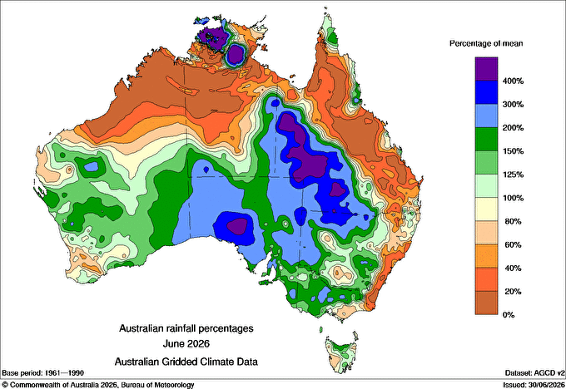
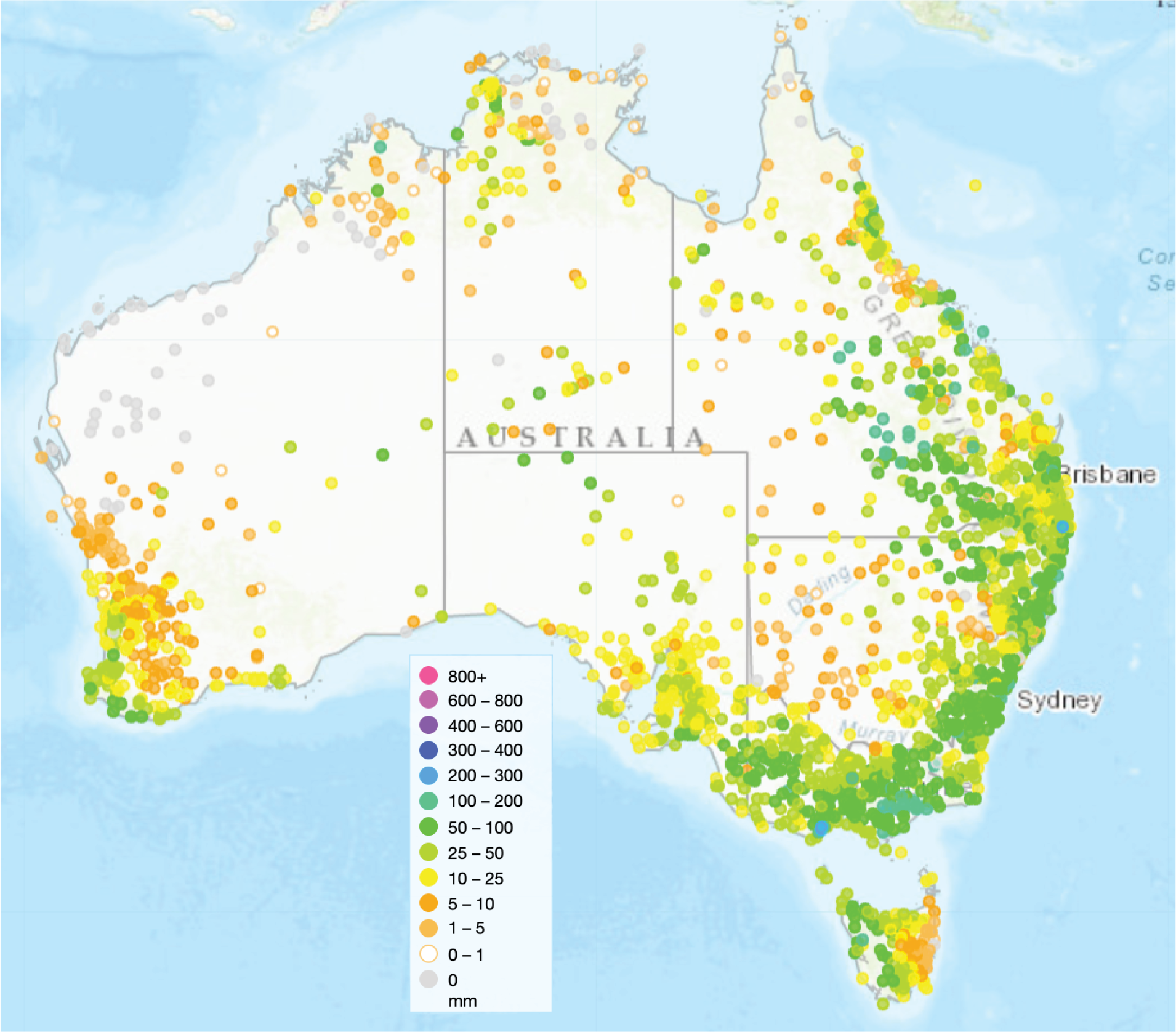
Harvest is underway in Queensland, northern NSW and parts of western South Australia with early barley starting to hit the bins. Late September and early October rain has given the southern crop another lift, with October national wheat production estimates creeping higher at ~31.5 million metric tonnes (MMT) and barley at ~17MMT. SA and VIC crops continue to swell with record or near record yields now almost a certainty across many districts. Reports from the central west of NSW have also been encouraging, with crops tracking at or above expectations even towards the marginal western fringes.
The north is a different story. Hot, dry weather through September has eroded yield potential around Gunnedah, Moree and Walgett, and early barley results in southern Queensland are patchy. Some early deliveries into the bulk handling network have suggested that we might see some pinched grains resulting in downgraded barley. Early planted crops have performed well, while later planted crops have struggled to find moisture and many have or will be cut for hay. Recent and forecast rain through NSW will hopefully fill heads and add yield to the later planted crops.
China Demand Sags, Barley Prices Drag
Australian barley pricing is pulling in two directions. In the north, barley pricing remains supported by the strong feedlot sector, however in Victoria and SA, where crops are big and getting bigger, barley has struggled to find a bid and has grinded lower to try and find export demand. The Chinese barley bid has been the bright spot for Aussie exporters since 2024 with China taking 6.1MMT in 2024, 6MMT in 2025 and ~7.7MMT so far this year through August.
China remains the anchor for our barley and new crop China buying has been slow to emerge. China's domestic corn market has been weighed down by a larger domestic crop, ample imported grain already in stock and a domestic pork sector battling margin compression. So there has been limited appetite for fresh barley business. SA and Vic barley is competitively priced and is the cheapest origin into China when the demand emerges, but for the time being wheat, canola and pulses will fill out the export pathway.
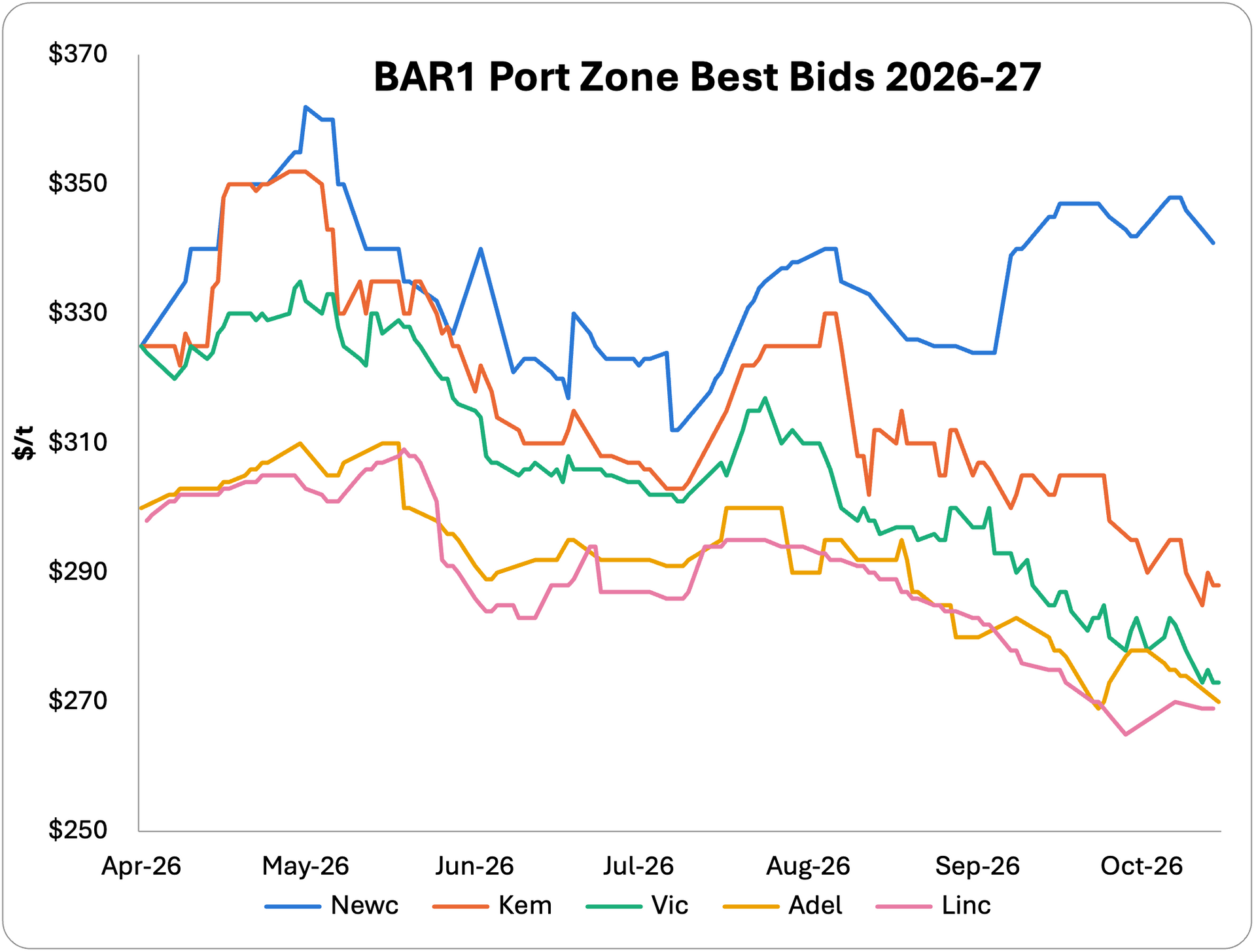
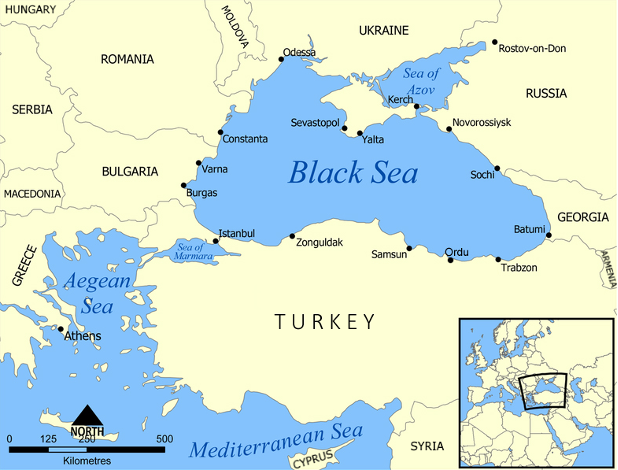
Export demand for Australian wheat has been solid, with exporters seeing strong demand for boxes and bulk vessels for nearby shipment even as offshore markets softened. Moving into 2027, offshore buyers are being more guarded, preferring to cover only what they need while they wait to see whether peace talks can deliver a Black Sea resolution that releases the valve on Russian and Ukrainian exports. Hopes of a deal have come and gone in recent weeks leaving Australia well placed to continue to capture any demand in the New Year.
WASDE & Black Sea
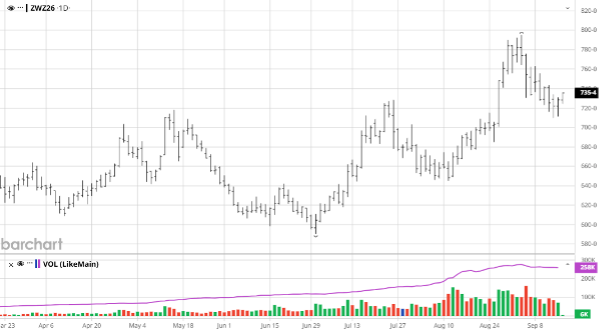
The October WASDE flipped the US corn balance sheet from tight to slightly more comfortable over the past two months. After cutting ending stocks and tightening things in August, the USDA lifted yield and raised stocks by nearly 200 million bushels in October. Corn weakness spilled over into wheat and although there is no end in sight for shipping problems through the Black Sea, logistics workarounds through Baltic ports and other European origins are picking up the slack. These makeshift outlets for Black Sea grain are band aid solutions and global trade volumes are continuing to build deficits as the weeks and months pass.
Drone attacks on shipping continue, making safe passage of cargo subject to huge insurance premiums adding significant cost, and that’s if the voyages are undertaken at all. The switch towards Australia that we have flagged in previous monthly updates is happening, but in a more subdued manner.
Offshore consumers will need to step up for January to March coverage in the coming weeks as Australian shipping availability will be stretched and the Aus exporters will see excess demand vs capacity.
The Washup
Australia has a big southern crop coming off, with record or near record yields in the south and a drought affected north that will need to draw grain from elsewhere once harvest wraps up. China, our key barley customer, has been slow to show up for new crop with its own corn market under pressure, so wheat, canola and pulses will fill the export program for now. There are many bright spots for Australian grain growers in the coming weeks and months and lots of opportunities in the global market. Fingers crossed for some finishing rain in the areas that need it and a dry break in those that don’t! We wish all growers a safe and smooth harvest.
If you would like to talk through pricing or pooling options, contact your local Advantage representative or call head office on 1300 245 586.
Share This Article
Other articles you may like