North vs South and Growing Black Sea Disruption
14 August 2026
Southern Crops Chasing Records, the North Chasing Rain
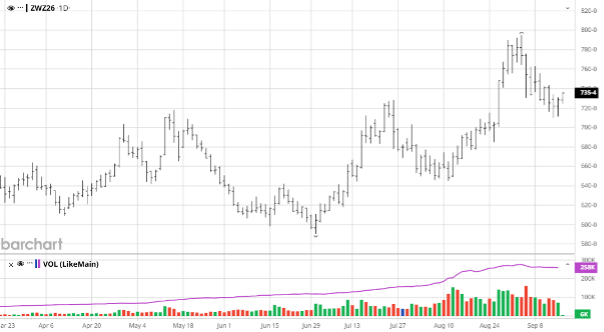
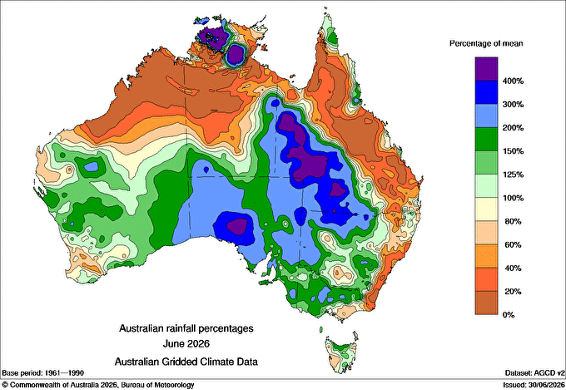
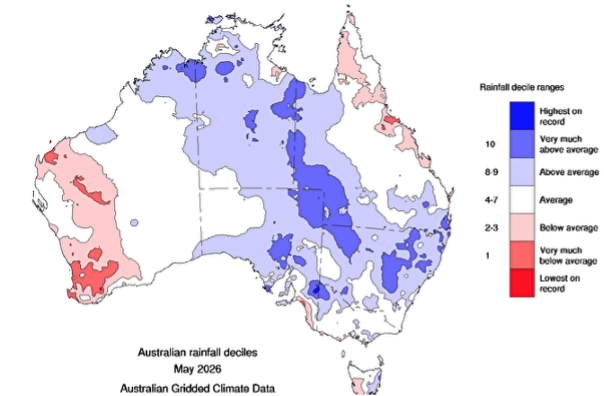
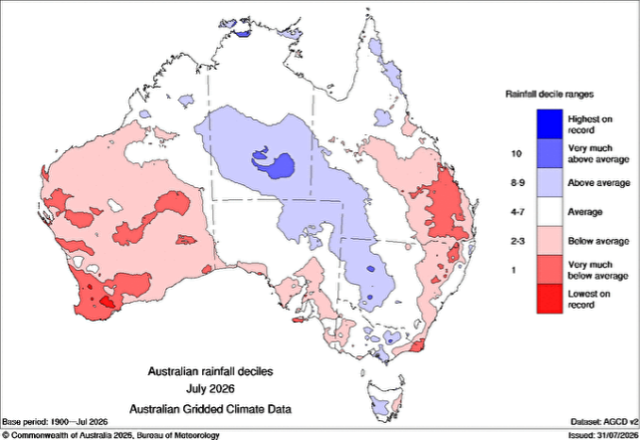
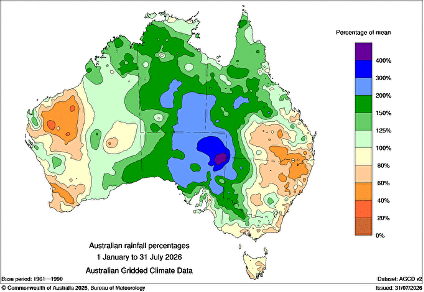
The fortunes of Northern and Southern growers continued to diverge through July and early August. Amidst a strengthening El Nino, South Australia, Victoria and Southern NSW, have had a strong run of rain events over the last six weeks effectively locking in above-average yields for the coming harvest (touch wood). Meanwhile Northern NSW and Queensland have begun to feel the impacts of the El Nino with limited rainfall and moisture profiles being depleted.
As a result, analysts are expecting South Australia and Victorian production to be near record, with many marginal areas having already received their annual rainfall.
Northern NSW and Queensland tell the opposite story. Wheat area is likely down 20 to 30 percent year on year and yields on the planted area will be down significantly.
Western Australia recorded its second-driest July on record, with root-zone soil moisture becoming scarce in the south. Recent rain events through early August have bought some breathing room however, an above average September is needed to counter the building deficits.
As the season progresses, we are building premium into the north to widen drawing arcs and incentivise grain movements into the hungry consumptive homes in Queensland.
Black Sea Disruption Deepens
Global wheat buyers are keeping a close eye on the Black Sea, where the Kerch Strait and Don-Azov Canal have now been closed for over four weeks, and Ukraine's Black Sea corridor has effectively ground to a halt since late July, right at the peak of its wheat harvest. As of early August, no foreign cargo vessels had entered Odesa ports for around two weeks, with approximately 90 percent of shipping operators suspending calls altogether according to maritime data.
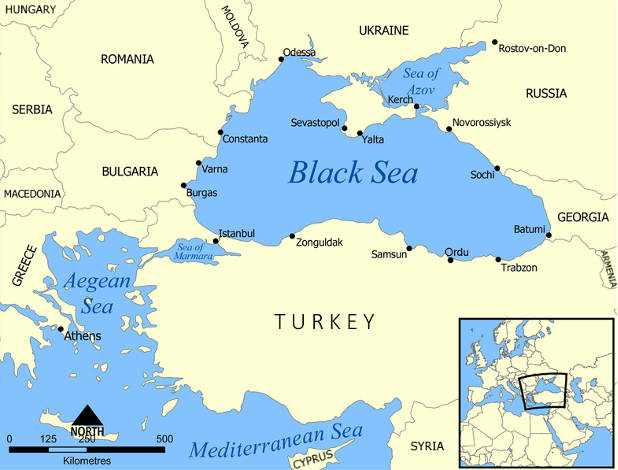
Escalation has continued this week, with strikes disabling Russia's main deepwater terminal at Novorossiysk and further retaliatory strikes reported around grain and oil terminals in Odesa. With both sides now targeting port infrastructure the monthly export deficit has and will continue to grow in a meaningful way. Ukraine's alternative pathways, rail through Poland and neighbouring EU states, plus Danube barges to Constanța, have capacity constraints well short of the lost tonnage and at a meaningfully higher cost to move. Russian alternatives are even more limited, with Russian exporters looking to move grain through the Baltics but have asked their government for huge rail subsidies to make this happen. Current estimates are that upwards of 2.5MMT of exports will need to be replaced monthly.
The impacts on the Australian market have been steady but mounting, with exporters seeing a pickup in enquiry for nearby August, September and October cargoes, both in containers and in bulk. Buyers from Asia, Africa and the Middle East will look to alternate suppliers, including Australia, to cover positions left open for cheap Black Sea wheat. Although these consumers are doing their best to delay purchases in the hope of a resolution, each passing day that these large Black Sea terminals are offline builds pressure in other origins like Australia.
The August WASDE
The August WASDE gave both the corn and wheat markets plenty to digest, with corn producing the bigger surprise. US yield came in at 180.7 bushels an acre, nearly two bushels below market expectations; however, an unexpected 1.2 million acre lift in harvested area largely offset the yield changes. Corn demand was pushed higher, with US corn ending stocks cut sharply.
The WASDE wheat report made for noteworthy reading because of the Black Sea conflict. Production cuts and increases largely balanced each other in different growing regions. The main takeaway was how the USDA handled Black Sea export figures. Russian exports were cut by only 1.5 million tonnes and Ukraine by 1 million, while lifting Russian and Ukrainian ending stocks by nearly 4 million tonnes combined.
The achievable export volumes and resulting stock build will need to be monitored as a considerable volume has already been lost in the first six weeks of the marketing year. The ability to catch this up amidst escalating strikes and severely damaged infrastructure will be a big job for slower and more expensive alternate pathways.
Larger Black Sea ending stocks will be an ongoing talking point for global buyers who will be hopeful to see that grain find its way out. The market has priced a decent war premium into cash markets, futures and shipping rates. If there is any sign that Black Sea logistics are normalising we could see the market reprice and give back these premiums.
The Washup
Australia has a Southern crop tracking towards records and a Northern crop needing relief. Offshore, the Black Sea disruption is well beyond what alternate routes can absorb, and with both Russia and Ukraine now losing capacity heading into their busiest export months, that gap looks more likely to widen with global buyers looking for alternatives. Fingers crossed for a kind spring finish across the county.
If you would like to talk through pricing or pooling options, contact your local Advantage representative or call head office on 1300 245 586.
Share This Article
Other articles you may like