Rain Falls, Prices Ease
16 July 2026
June Rainfall Arrives
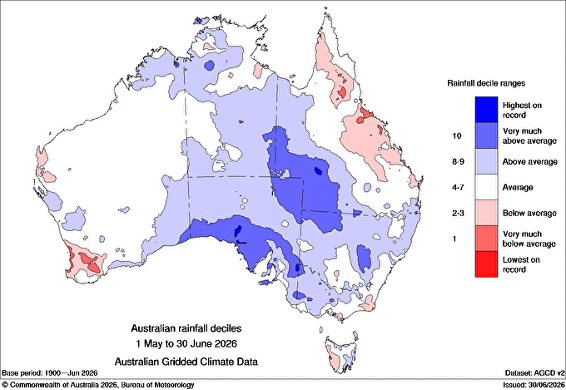
After a difficult start to the season through Summer and early Autumn, steady rainfall through May and June has materially improved the outlook for large parts of the cropping belt.
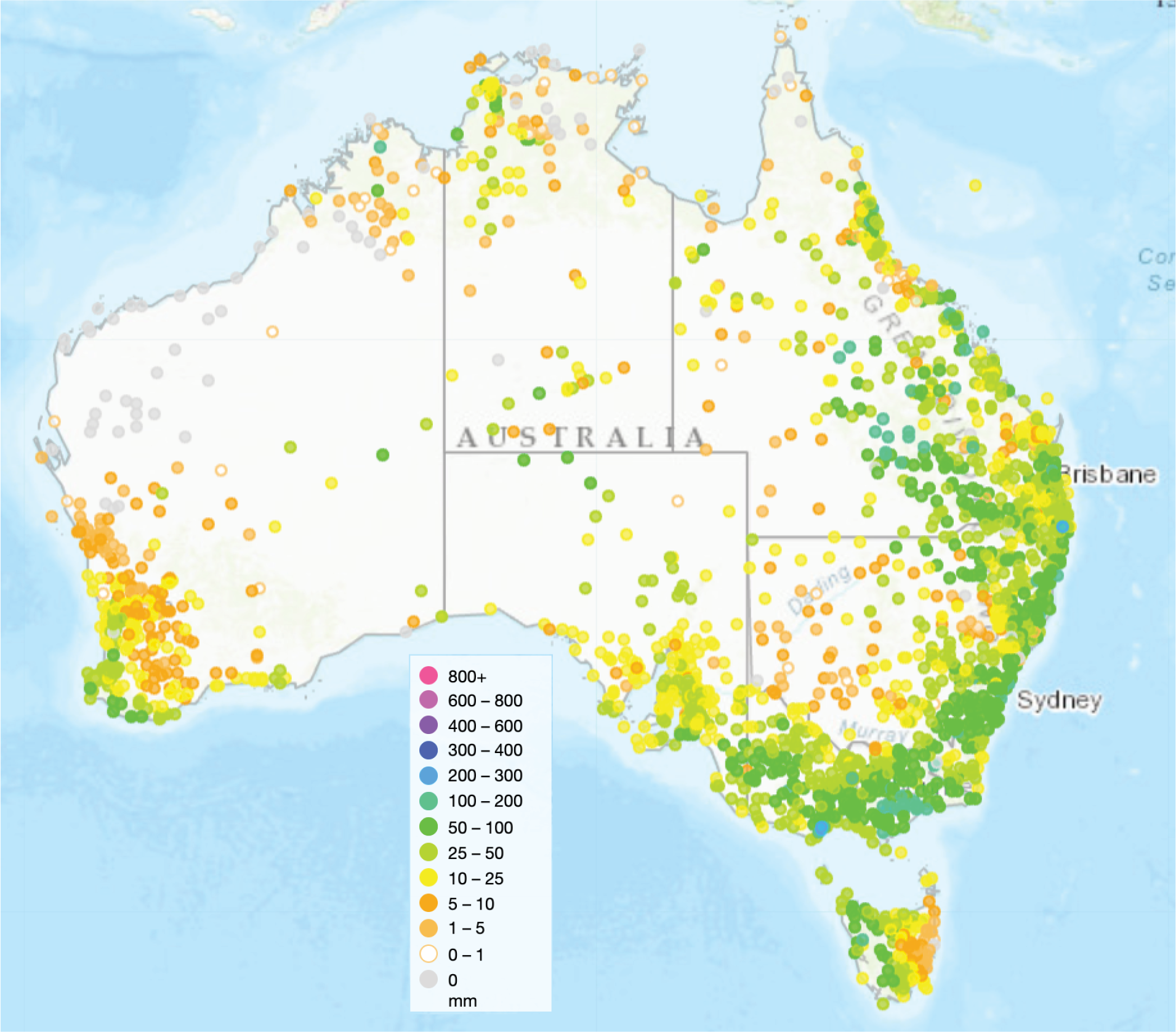
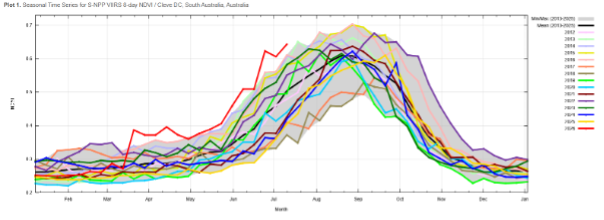
Victoria and South Australia had consistent showers through the month, recording between 150 and 400 percent of their long-term average rainfall in June. This is a great result against a seasonal outlook that has consistently forecast a drier than average month. As a result, vegetation health indexes are literally “off the charts” in many SA and Vic regions with readings well above any readings over the past 15 years. The example below is Cleve on the Eyre Peninsula and is indicative of many SA and Vic regions.
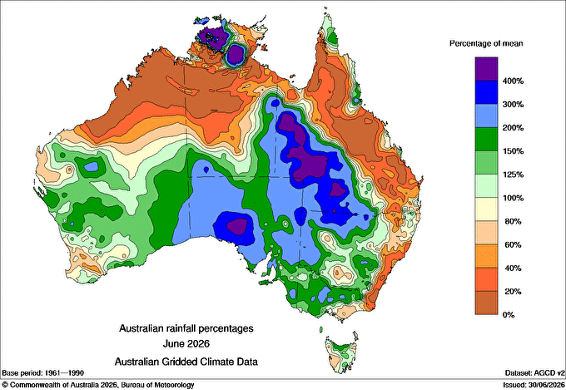
Coverage on the East Coast has been patchier. In NSW, the Western Riverina and Moree plains have missed out on the larger rain events. The Southwest slopes, central West and far Northwest have managed to build solid moisture profiles over the past eight weeks and have solid crop emergence and progression due to unseasonably warm weather. Unfortunately, large parts of Queensland have missed these showers and will also need a favourable Spring.
Western Australia’s in crop rainfall sits close to seasonal averages but has been front loaded through March and April, missing out on storms through May and June. Parts of Southern WA are registering on the Aus drought monitor and will need a big finish through Spring.
On the whole, the cropping footprint has had a decent June, and it has substantially improved the national crop prospects that we were facing in April.
Domestic Prices Soften as the Risk Premium Unwinds
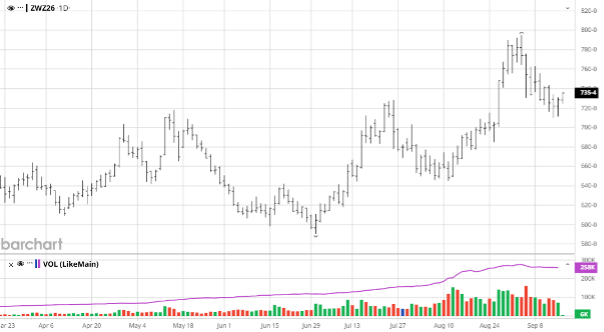
The flip side of the rainfall improvement is that the risk premium built into Australian prices through early Autumn very quickly eroded through late May and June. Australian wheat and barley rallied to a level that priced us out of global trade and rationed supply ahead of tighter domestic S&D for 2026/27. With improved prospects, the Australian market has now softened enough to re-engage the global market on both the old and new crop, and price more export business.
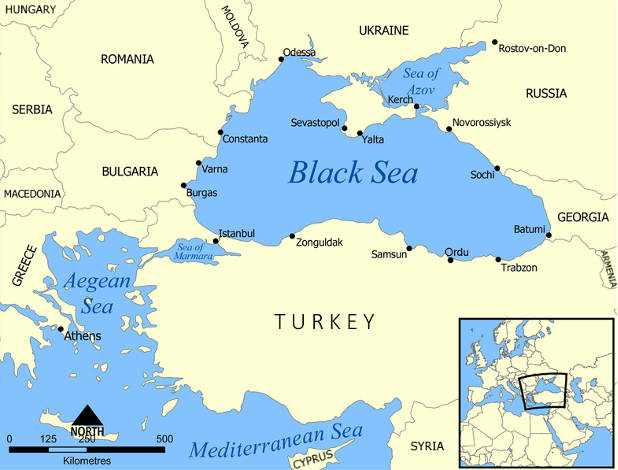
Globally, all eyes are now focussed on the Northern Hemisphere where heat has been the dominant theme to monitor across Europe, the US and Canada. Record temperatures through France, Germany and other parts of Europe have drastically cut corn prospects. Similarly, dryness is emerging in parts of the US corn belt right as we enter the pollination phase which is a highly weather sensitive time. Further, in the last week Russia has suspended shipping through the Kerch Strait and Don-Azov Channel following drone strikes in the Sea of Azov. This shipping route carries up to a quarter (~10-12mmt) of Russian wheat exports each year.
Should the Northern Hemisphere dryness persist, global values will firm and Australian growers will be rewarded. Asian consumers who have been overly reliant on cheap Black Sea supply in recent times will also need to reconnect with Australian suppliers if disruptions in the Kerch Strait continue.
El Nino Still Lurking
The rainfall improvement has arrived despite a strengthening El Nino. The Nino 3.4 index was sitting at +1.47 degrees for the week ending 12 July, comfortably above the official El Nino threshold and still climbing. Forecasters are still leaning towards a strong to very strong event, with most models pointing to one of the biggest events since 1950. Some of the recent rain has been assisted by a positive Southern Annular Mode, which has now returned to neutral and is forecast to go negative, increasing the likelihood of a drier East Coast.
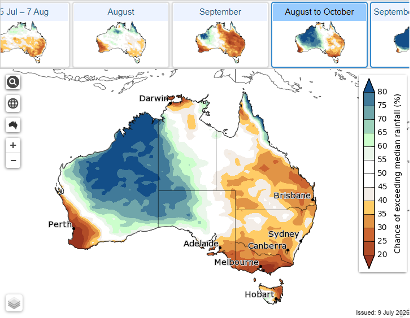
The Bureau's outlook released on the 9th of July for the August to October period still shows below average rainfall as the more likely outcome across southern, central and eastern cropping regions. Interestingly, a large sweeping wet pattern looks likely for Northern WA, unfortunately not covering any of the grain belt, but indicating that there is some activity brewing in the Indian Ocean.
The Washup
May and June rainfall has greatly improved the season's prospects and taken the heat out of local prices, but the strong El Niño forecast is still active and strengthening and longer term outlooks still lean towards a dry Spring. With the Northern Hemisphere dry and Black Sea facing potential export challenges, it remains a good time to have a marketing plan in place.
If you would like to talk through pricing or pooling options, contact your local Advantage representative or call head office on 1300 245 586.
Share This Article
Other articles you may like